How Does Play Affect A Child's Emotional Development?

What is emotional intelligence, and why is its development becoming an increasingly central focus in modern parenting? How can we help children understand themselves and others—without turning the process into a chore? The answer is surprisingly simple: through play.
Emotional intelligence (or EQ) is the ability to recognize one’s own emotions, understand the feelings of others, and navigate both with confidence in everyday life. It shapes how we build relationships, handle stress, collaborate with others, and form our self-image. Today, many experts believe that emotional intelligence may be just as crucial to success as cognitive intelligence (IQ)—if not more.
When play becomes something deeper
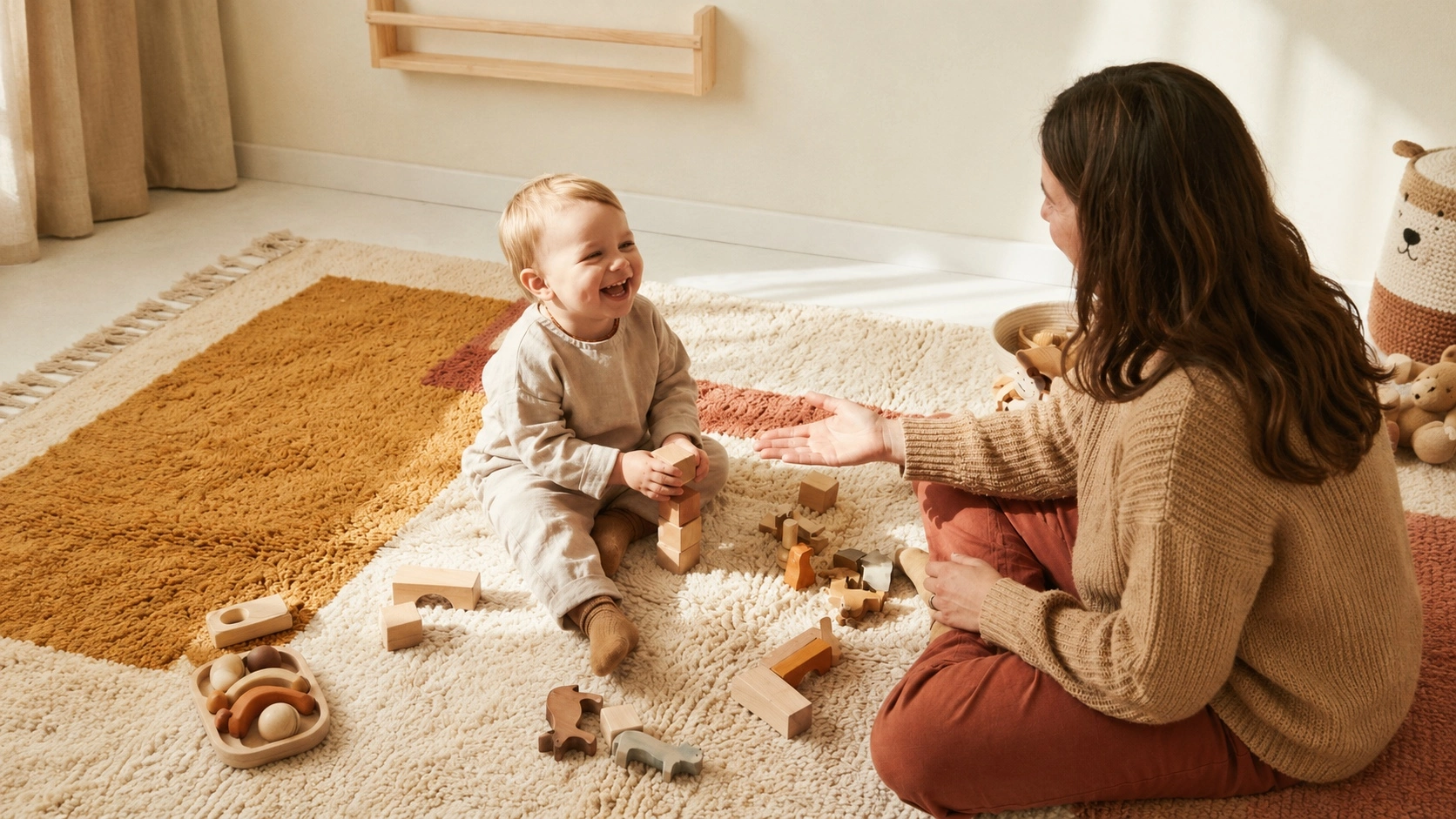
For a child, play isn’t just a pastime—it’s a language. It’s how they explore the world, express their emotions, and learn to engage with others. Through play, children discover colors, shapes, and space, but more importantly, they begin to discover themselves. It’s in these playful moments that they practice facing their fears, offering kindness, and developing empathy—without even realizing they’re learning something vital.
Role-playing: learning to see through another’s eyes
What seems like simple make-believe—games like "mom and baby," "doctor and patient," or "teacher and student"—can actually serve as a powerful emotional learning ground. By stepping into different roles, children begin to imagine what others might be feeling and how they might respond in similar situations. This imaginative exercise is the beginning of empathy—the ability to feel with someone else and care deeply about their experience.
Emotion cards and conversations that matter
There are games specifically designed to help children recognize and articulate their emotions. For instance, picture cards that depict facial expressions or everyday scenarios invite children to choose one and answer, “How would you feel in this situation?” These simple exchanges lay the groundwork for emotional awareness—learning to name and talk about feelings, and to understand the emotional world within.
Stories as a safe space for big feelings
Fairy tales and stories create a gentle, imaginative space where children can explore difficult emotions. A hero who overcomes fear, or a character who rises above challenges, may mirror the child’s own struggles. Through these narratives, children gain insight into their inner world and find comfort, perspective, and even solutions—without judgment or pressure.
Creativity: when emotions take shape
Drawing, sculpting, dancing, planting flowers, arranging stones into faces—these creative activities do more than entertain. They become a channel for emotional expression, especially when words fall short. Many children struggle to verbalize what they feel, but they can draw it, build it, or move through it—and this is where play becomes a powerful tool for understanding the self.
Play is one of the most natural and effective ways to nurture emotional intelligence. It gives children the freedom to listen to themselves and to others, to express what’s happening inside them, and to process overwhelming emotions without losing connection to the outside world. Most importantly, all of this unfolds in their own time—gently, joyfully, and with genuine curiosity.