How to Choose the Best Baby Carrier?

Carrying your baby is part of everyday life for most parents. During the first few months in particular, babies often want to be held close, cuddled and reassured by the warmth and familiarity of their parent — even while out and about. A baby carrier makes this much easier, allowing parents to keep their baby close while leaving their hands free.
But choosing a baby carrier involves more than picking a colour you like or a fabric that feels soft. The way a carrier supports your baby’s body matters. So do hip positioning, age and weight requirements, airway safety and, of course, how comfortable the carrier feels for you.
This is where an ergonomic baby carrier comes in. A well-designed carrier should work with your baby’s natural posture, provide the right support and make everyday babywearing comfortable for both of you.
What Makes a Baby Carrier Ergonomic?
An ergonomic baby carrier is designed with a baby’s anatomy and natural movement in mind. It should hold your baby securely while allowing the hips, pelvis and spine to remain in a natural, well-supported position.
One of the most important things to look at is hip support. A baby’s thighs should be supported while the legs remain bent and naturally spread apart. Ideally, the carrier’s seat should support the thighs all the way towards the knees rather than allowing the legs to hang unsupported.
When choosing a carrier, look closely at:
- the width of the seat supporting the baby’s legs;
- whether the thighs are adequately supported;
- whether the baby’s back can remain in a natural position;
- how easily the carrier can be adjusted as your baby grows;
- whether the carrier is suitable for your baby’s age and weight.
It is also worth remembering that the word ergonomic is not, by itself, a guarantee of good design. Always look at the actual construction of the carrier and follow the manufacturer’s instructions for your particular model.

The M Position: Why Does It Matter?
If you have been researching infant carriers, you have probably come across the term M position.
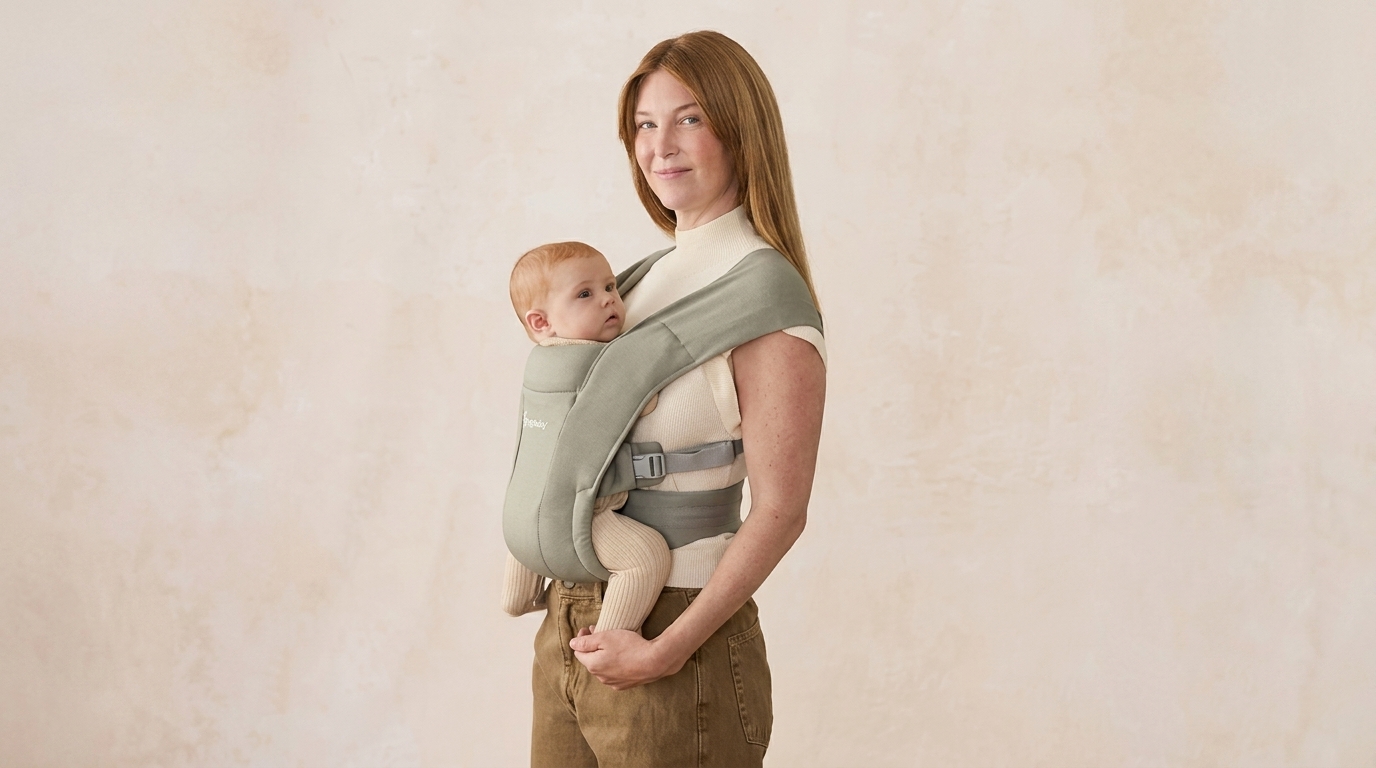
The name comes from the way a baby’s legs are positioned: the knees are bent and naturally spread apart, with the knees sitting slightly higher than the bottom. With the thighs supported by the carrier, the legs form a shape that resembles the letter M.
This position is considered supportive of healthy hip development, particularly during the first months of life, when the hip joints are developing rapidly.
That said, a baby carrier should not be viewed as a treatment for developmental dysplasia of the hip (DDH), nor can any particular carrier guarantee that hip dysplasia will not occur. What matters is providing a position that allows the baby’s hips and legs to move freely while keeping the thighs properly supported.
During the early months, carrying your baby facing towards you can make it easier to achieve this position. Parent-facing carrying is generally preferred for young infants because it also makes it easier to monitor their posture and breathing.
How Should a Baby Sit in a Carrier?
Once your carrier is adjusted, there are a few simple things you can check to make sure your baby is positioned correctly.
The knees should sit slightly higher than the bottom, while the thighs should be naturally spread apart and supported by the carrier. The legs should remain free to move. There is no need to straighten them or press them tightly together.
The baby’s back should also be well supported without being compressed. The carrier should hold your baby securely while still allowing their body to maintain a natural posture.
For young babies, head and neck support is particularly important. Their head should be properly supported, but their face must always remain clearly visible.
A correctly fitted child carrier should feel comfortable for the parent, too. If you find yourself constantly supporting the baby with your hands, readjusting the straps or leaning forward to compensate, it is worth stopping and checking the fit.

Why Must Your Baby’s Face Always Be Visible?
Hip positioning is important, but it is not the only safety consideration when using a baby carrier. Keeping your baby’s airway clear is essential.
Your baby should sit securely against your body, with their face uncovered and visible at all times. Their chin should not be pressed down onto their chest, and their back should be properly supported. Ideally, your baby should be positioned high enough for you to easily kiss the top of their head.
The American Academy of Pediatrics pays particular attention to airway safety in babies younger than four months. At this age, infants are more vulnerable to airway obstruction, so their nose and mouth must never be covered by fabric or pressed against the parent’s body.
A baby carrier is also not a safe place for routine sleep. If your baby falls asleep while being carried, move them to an appropriate safe sleep surface as soon as reasonably possible.
The same applies to feeding. Breastfeeding or bottle-feeding while the baby remains in the carrier is not recommended. Take your baby out of the carrier and feed them in a safe, appropriate position.
Why Do Age and Weight Matter When Choosing a Baby Carrier?
Not every carrier is suitable for every baby. A newborn needs a different level of support from an older infant who has developed stronger head and trunk control.
Before buying a carrier, check the manufacturer’s specifications carefully, including:
- minimum and maximum weight limits;
- recommended age range;
- height or size requirements;
- head and neck support requirements;
- available carrying positions;
- the range of adjustments offered by the carrier.
The American Academy of Pediatrics also recommends choosing a carrier that fits your baby properly and regularly checking its seams, fasteners and other attachment points to make sure everything remains secure.
Why Does the Carrier’s Design Matter?
A carrier for baby needs to support your baby, but it should also work comfortably with your body. Your baby’s weight is distributed across your shoulders, waist and back, which makes a well-designed harness and easy adjustment particularly important for everyday use.
A wide, properly fitted waist belt can help distribute your baby’s weight more evenly, while adjustable shoulder straps allow the carrier to accommodate different body shapes and sizes.
The fabric matters as well. Breathable materials can be especially useful in warm weather, helping reduce the amount of heat trapped between you and your baby.
Pay attention to your own posture, too. If you find yourself leaning noticeably forwards or backwards while carrying your baby, the carrier may not be adjusted correctly.
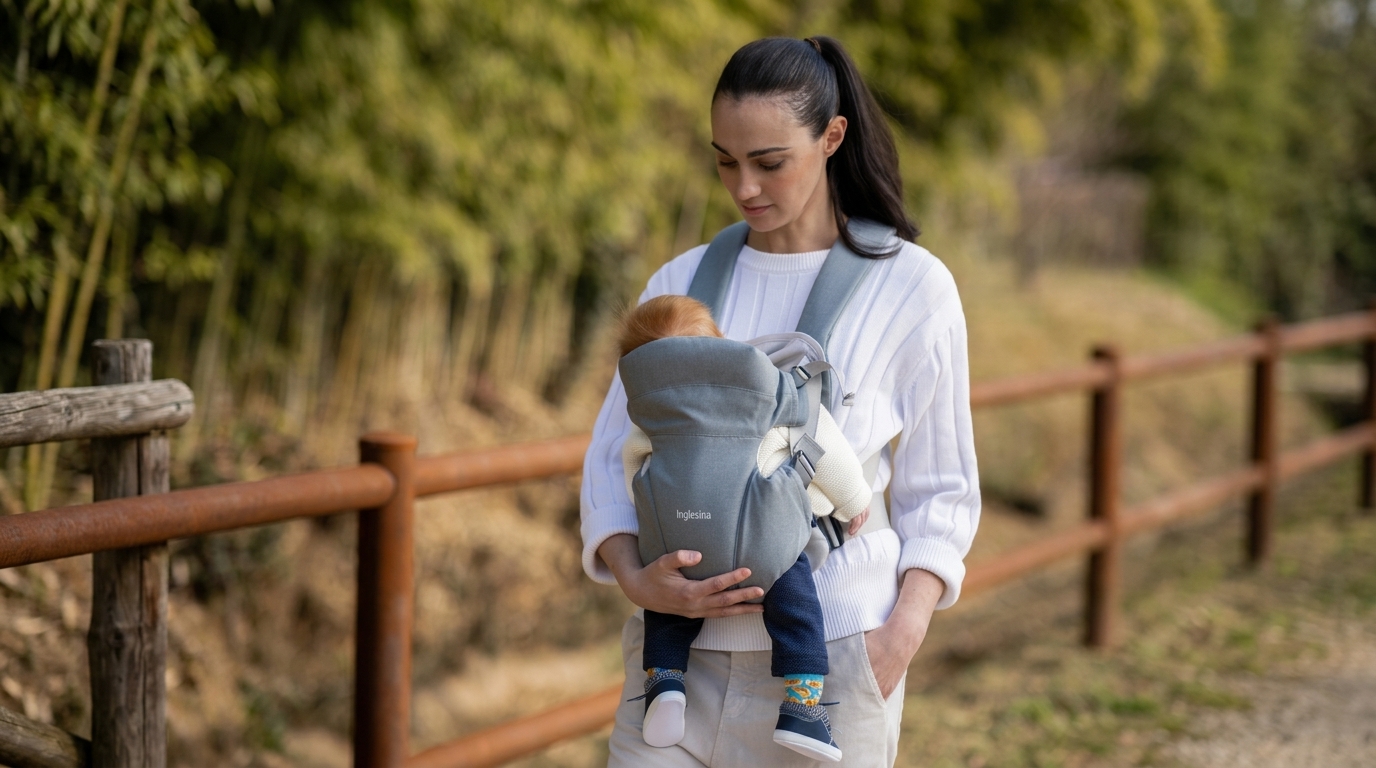
Inglesina Front: A Practical Choice for Everyday Babywearing
If you are looking for an ergonomic baby carrier, the Inglesina Front is one option worth considering from the renowned Italian baby-care brand.
The Front features adjustable straps designed to provide waist support, distribute your baby’s weight more effectively and make everyday carrying more comfortable. It is made from soft gabardine fabric for a comfortable feel against the body.
The carrier is designed to accommodate different stages of your baby’s development. During the early months, your baby can be carried facing you. Later on, a forward-facing position may be suitable, depending on the child’s age, development and the manufacturer’s instructions.
For parents who want one carrier that can remain useful as their baby grows, this flexibility can be particularly practical.
Where Can You Buy Inglesina in Georgia?
If you are looking for an Inglesina baby carrier, you can explore the available models at Labebe Boutique.
As part of Labebe Boutique’s premium baby collection, the Italian carrier is a natural choice for parents who value quality, functionality and thoughtful design alongside everyday comfort.
When choosing a baby carrier, it is worth looking at the complete picture rather than focusing on one feature. Consider your baby’s age and weight, hip and thigh support, natural leg positioning, back and head support, airway safety and how easily the carrier can be adjusted.
The right carrier can make everyday life considerably easier, allowing you to stay close to your baby while keeping your hands free. The key is to choose a model that fits your baby’s current stage of development and to prioritise safe positioning and proper support alongside comfort.