School Road Safety in Georgia: Risks and Challenges
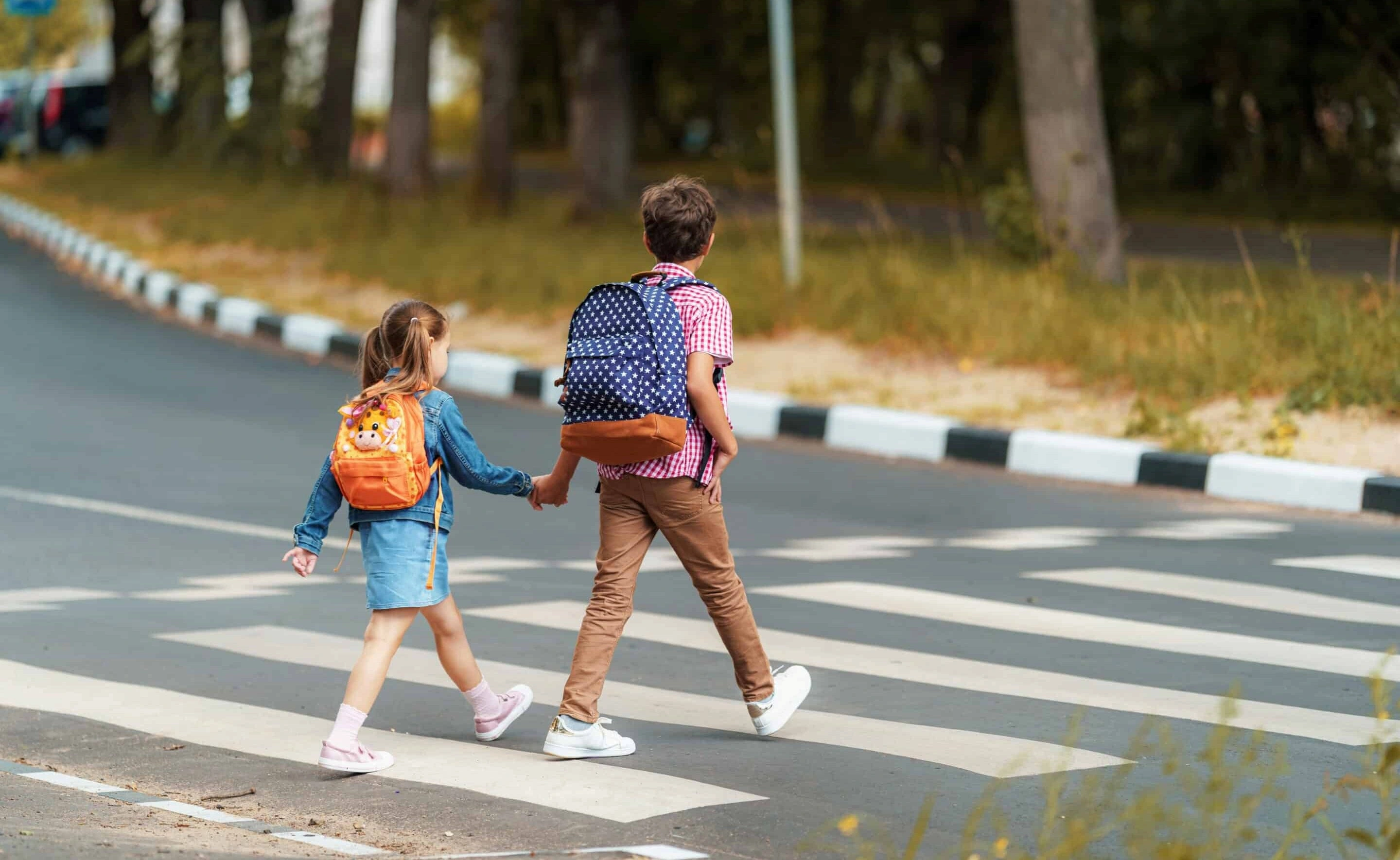
When children start attending school, ensuring the safety of the surrounding area becomes a top priority. Unfortunately, in Georgia, the journey to school often poses significant risks. Congested streets, speeding vehicles, and occasionally improperly installed traffic signs create environments where children are particularly vulnerable.
Irakli Izoria, head of the Road Infrastructure Association, highlights that the development of safe zones around schools largely depends on the initiative of local authorities. According to him, the association has already implemented numerous projects aimed at enhancing these areas, with Tbilisi, Zugdidi, and the Department of Roads actively participating. As a result, around 300 schools nationwide now feature designated safe zones. Yet, Izoria stresses that these efforts represent merely “a drop in the bucket,” as the country’s needs remain far greater.
Why is 30 km/h so important?
The fundamental principle behind school safety zones is straightforward: vehicle speeds in the vicinity of educational institutions should not exceed 30 km/h. Research indicates that at this speed, a pedestrian involved in a collision has approximately an 80% chance of survival. This statistic is particularly crucial when it comes to protecting children.
Currently, nearly 80% of schools in Georgia lack designated safety zones. This leaves thousands of children navigating roads daily where traffic regulations are either unclear or routinely ignored by drivers.
The danger of improper road markings
Road infrastructure experts point out that some school-area designs are poorly conceived. For instance, dotted lines painted in front of schools permit vehicles to overtake, transforming the very spaces where children walk into hazardous zones.
A well-designed school zone should include:
- Clearly marked pedestrian crossings;
- Traffic lights where necessary to regulate traffic flow;
- Road signs indicating "pedestrian crossing," "speed limit 30 km/h," "school zone," and other relevant information;
- Speed bumps and monitoring cameras to encourage drivers to slow down.
Strict adherence to these traffic measures dramatically reduces the likelihood of accidents
Izoria notes that international experience demonstrates how establishing safe zones near schools not only lowers accident rates but also fosters a culture of safer mobility for children. In the European Union, such practices have long been standard, contributing to a reduction in road accidents and an overall improvement in road safety awareness.
Similar outcomes could be achieved in Georgia if the creation of safe school zones were mandated by law. “It is essential that the term ‘school zone’ be formally recognized in legislation – this will enhance the entire road safety system,” Izoria explains.
Creating a safe school zone is not merely an infrastructure project; it represents a shared responsibility among the state, parents, and society at large. By working together, we can reduce risks and provide children with a safer, healthier environment in which to grow and learn.